
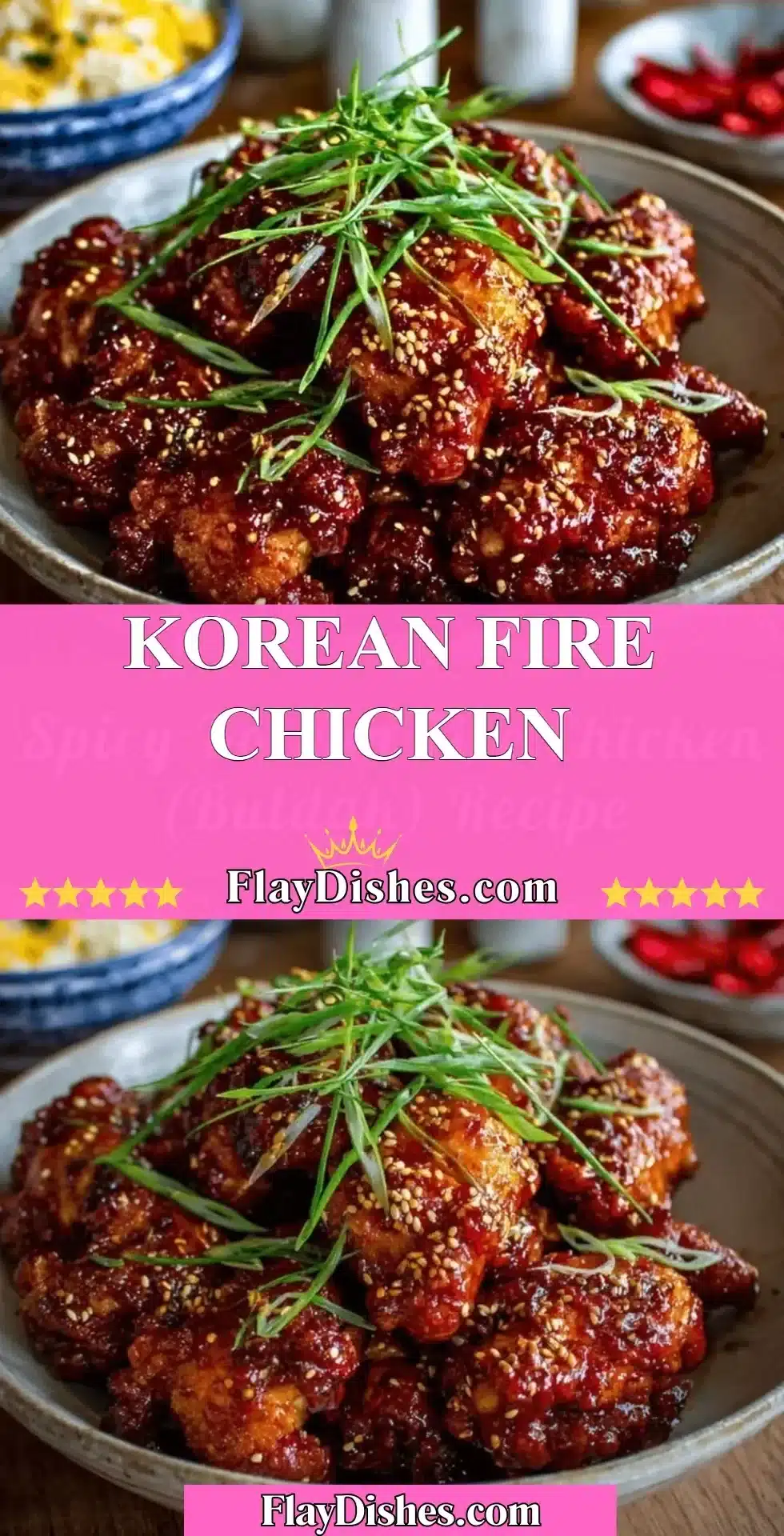
When I first tried Korean Fire Chicken, I felt like I had discovered a secret doorway to flavor nirvana. It was during a cozy winter evening at my friend’s house in Asheville, surrounded by an intimate group of friends, that I experienced this dish for the first time. The air was filled with a rich, spicy aroma, and my taste buds tingled just thinking about what awaited me at the dinner table. My friend had prepared this vibrant dish with tender pieces of chicken smothered in a glossy red sauce that glistened like rubies.
As I savored each bite, the heat of the gochujang mixed with sweet undertones of honey created an unforgettable harmony. I can still remember the warmth spreading through me as laughter filled the room. Korean Fire Chicken somehow encapsulated that joyous essence of gathering around food—easy to share, beautifully presented, and utterly addictive. Ever since that dinner, this dish has become a cherished staple in my kitchen, not only because of its incredible flavor but also for the connections it fosters. Each time I prepare it, I’m transported back to that wonderful evening, surrounded by good company, and filled with love.
Flavor and Popularity
The Unique Flavor Profile of Korean Fire Chicken
Korean Fire Chicken stands out with its bold and intricate flavor profile. The key to its deliciousness lies in the combination of ingredients that create a multi-layered taste experience. The star of this dish is gochujang, a fermented Korean chili paste that introduces a delightful umami kick and a slightly sweet note, making it uniquely savory and irresistible. When blended with garlic and ginger, this base becomes a symphony of flavors, transforming the chicken into a mouthwatering centerpiece.
Adding a splash of soy sauce contributes a salty depth, while honey balances the heat with its sweetness. And let’s not forget the textured crunch of toasted sesame seeds and scallions that sprinkle the final touch, elevating this dish to culinary heights. All these elements work together in perfect harmony, making Korean Fire Chicken a flavor explosion on your palate.
Why This Recipe Is a Family Favorite and Crowd-Pleaser
What I love most about Korean Fire Chicken is its ability to bring people together. It’s a dish that can be enjoyed on cozy weeknights or spectacularly served during gatherings, effortlessly impressing guests with its vibrant colors and rich tastes. Every mouthful reminds folks of home, evoking warmth, comfort, and the kind of joy that only a hearty meal can provide. With its perfect balance of spice, sweetness, and savory goodness, it appeals to both seasoned spice enthusiasts and those preferring a milder palate—an aspect loved by families everywhere.
Cooking Korean Fire Chicken in my kitchen feels like a celebration every time. The aroma wafting through the house, the steamy rice on the side, and the clinking of chopsticks bring back vivid memories of family dinners filled with laughter and love. Whether it’s a busy weeknight or a festive gathering, this dish manages to spread joy and togetherness, making it a true family favorite.
Ingredients and Preparation
Essential Ingredients and Possible Substitutions
To create a mouthwatering Korean Fire Chicken, you’ll need the following essentials:
- Chicken (breast or thighs): I prefer using thigh meat for its tenderness, but boneless chicken breasts work beautifully too.
- Gochujang: This spicy red chili paste is the heart of the dish. If you’re in a spice pinch, you can try sriracha, though the flavor will differ slightly.
- Honey: It’s perfect for balancing the heat; maple syrup can be a great substitute if you’re looking for a vegan alternative.
- Soy Sauce: Regular or low-sodium varieties are great. Tamari is a suitable gluten-free option.
- Garlic: Fresh minced garlic offers the best flavor, but in a rush, garlic powder can work in a pinch.
- Ginger: Use fresh ginger for its bright and zesty flavor; ground ginger can also work if fresh isn’t available.
- Scallions: A garnish that adds crunch and freshness—feel free to replace with chives if that’s what you have on hand.
- Sesame seeds: Toasted sesame seeds enhance the dish with an earthy flavor; pepitas can be used for a nutty twist.
This recipe is wonderfully adaptable based on your pantry. So if you’re missing an ingredient, don’t hesitate to improvise; it’s all about making it work for you.
Step-by-Step Recipe Instructions with Tips
Here’s how to create this delightful dish in the comfort of your home:
Prep the Chicken: If using chicken thighs, cut them into bite-sized pieces. For breasts, you can leave them whole or slice them into strips. Either way, it’ll soak up that heavenly sauce beautifully.
Make the Sauce: In a bowl, combine gochujang, honey, soy sauce, minced garlic, and grated ginger. Whisk until smooth. The texture should be thick yet pourable, almost like a glaze.
Marinate: Toss the chicken pieces in the sauce, ensuring every piece is generously coated. Let it marinate for at least 30 minutes, but if time permits, leave it for a few hours or even overnight for deeper flavor.
Cook the Chicken: Heat a skillet over medium-high heat and add a drizzle of oil. When the oil is hot, add the marinated chicken. Make sure to scrape in all the extra sauce from the bowl—it’s liquid gold!
Sauté: Cook the chicken for about 6–8 minutes, stirring occasionally. You want the chicken to get beautifully browned and caramelized.
Final Touch: Once the chicken is fully cooked and the sauce has thickened, remove it from heat and sprinkle with sliced scallions and toasted sesame seeds.
Serve: I love to serve Korean Fire Chicken with a steaming bowl of rice or over fresh lettuce wraps, but it’s also fabulous alongside stir-fried vegetables or in a soft taco. Don’t forget your favorite pickled vegetables for that perfect crunch!
Cooking Techniques and Tips
How to Cook Korean Fire Chicken Perfectly
Cooking Korean Fire Chicken to perfection requires attention to detail. Here are some helpful tips:
- Heat Control: Keep an eye on your skillet. Too high a flame can char the sauce and chicken before they cook through, while too low may leave them stewing instead of sautéing.
- Marination: The longer you marinate, the more flavorful your chicken will be. However, even a quick soak offers delightful results.
- Thickening the Sauce: If you’d like a thicker sauce, let the chicken simmer for a few minutes after it’s cooked to reduce the liquid.
Common Mistakes to Avoid
As you venture into making Korean Fire Chicken, here are a few pitfalls to steer clear of:
- Skipping the Marinade: If you skip marinating your chicken, you risk missing out on the depth of flavor the dish offers. So let it soak!
- Using Cold Chicken: For best results, let your chicken sit at room temperature for about 20 minutes before cooking. This helps it cook more evenly.
- Rushing the Cooking Time: Patience is key! Allow the chicken to caramelize well; it builds a lovely flavor that enhances the dish tenfold.
Health Benefits and Serving Suggestions
Nutritional Value of Korean Fire Chicken
Not only is Korean Fire Chicken bursting with flavor, but it also brings a variety of health benefits to the table:
- Protein-Packed: Chicken provides a hearty source of lean protein, essential for muscle repair and overall health.
- Rich in Vitamins: The garlic and ginger add not just flavor, but also anti-inflammatory properties and antioxidants that promote wellbeing.
- Low in Calories: Depending on how you prepare it, this dish can be a lighter option compared to many other comfort foods, especially when served with fresh veggies.
Best Ways to Serve and Pair This Dish
While Korean Fire Chicken is perfectly satisfying on its own, it pairs wonderfully with a range of side dishes. Here are a few of my favorites:
- Steamed Rice: The ultimate companion. White, brown, or even cauliflower rice soaks up the sauce beautifully.
- Vegetable Stir-Fry: Fresh veggies like bell peppers, broccoli, and snap peas add crunch and vibrancy.
- Korean Banchan: Serve it with various Korean side dishes like kimchi or pickled radishes for a complete feast.
- Salad: A fresh, tangy cabbage slaw can offer a refreshing contrast to the heat of the chicken.
FAQ Section
What type of mushrooms are best for Korean Fire Chicken?
While mushrooms are not typically included in traditional recipes, they can add depth if desired. Shiitake mushrooms, with their earthy flavor, will blend beautifully, bringing a unique twist to your dish.
Can I use dried garlic instead of fresh?
Yes, you can use dried garlic in a pinch, but remember that fresh garlic provides a much bolder flavor. If you use dried, start with a smaller amount and adjust to taste.
How do I store leftover Korean Fire Chicken?
Make sure to store leftovers in an airtight container in the fridge. It will stay fresh for up to 3–4 days.
Can I freeze Korean Fire Chicken?
Certainly! Place the cooled chicken in a freezer-safe container. It can be frozen for up to three months. Just thaw it in the fridge before reheating!
As I look back at my fond memories tied to Korean Fire Chicken, I find heartfelt joy in sharing this dish with others. You’re bound to create a similar atmosphere in your home, surrounded by laughter, love, and the irresistible aroma of cooking. If you’re like me, you know that food is often the centerpiece of our lives, bringing us together in the most delightful ways. With every bite, you’ll be transported to that wonderful evening I cherish so deeply. Trust me, you’ll want to make this again and again. Happy cooking!
Print
Korean Fire Chicken
- Total Time: 30 minutes
- Yield: 4 servings 1x
- Diet: Paleo
Description
A vibrant dish featuring tender chicken pieces in a glossy, spicy-sweet sauce made with gochujang, perfect for gatherings or cozy weeknights.
Ingredients
- 1 lb chicken thighs (boneless, cut into bite-sized pieces)
- 3 tbsp gochujang
- 2 tbsp honey
- 2 tbsp soy sauce
- 3 cloves garlic (minced)
- 1 tbsp fresh ginger (grated)
- 2 scallions (sliced, for garnish)
- 1 tbsp toasted sesame seeds (for garnish)
- 1 tbsp oil (for cooking)
Instructions
- Prep the Chicken: Cut the chicken thighs into bite-sized pieces. Leave breasts whole or slice into strips.
- Make the Sauce: In a bowl, mix gochujang, honey, soy sauce, garlic, and ginger until smooth.
- Marinate: Toss chicken with sauce and let marinate for at least 30 minutes.
- Cook the Chicken: Heat oil in a skillet over medium-high heat, add chicken and all the extra sauce. Cook for 6-8 minutes until browned.
- Final Touch: Remove from heat, sprinkle with scallions and sesame seeds.
- Serve: Enjoy with rice, lettuce wraps, or stir-fried vegetables.
Notes
For best flavor, marinate the chicken longer if time permits. Adjust spice levels by using less gochujang if desired.
- Prep Time: 15 minutes
- Cook Time: 15 minutes
- Category: Main Course
- Method: Sautéing
- Cuisine: Korean
Nutrition
- Serving Size: 1 serving
- Calories: 350
- Sugar: 5g
- Sodium: 400mg
- Fat: 12g
- Saturated Fat: 4g
- Unsaturated Fat: 6g
- Trans Fat: 0g
- Carbohydrates: 30g
- Fiber: 1g
- Protein: 30g
- Cholesterol: 70mg
Keywords: Korean Fire Chicken, spicy chicken, Korean cuisine, gochujang, comfort food